I was just informed of this great project called Schizowhat? that is a website aimed at raising awareness about schizophrenia. For those of you who don’t know, I have schizophrenia. I was first diagnosed when I was about 15/16 years old. I hope others of you who are interested or in some way impacted by schizophrenia will check out the website and contribute! Let’s fight the stigma! Yay!
Psychiatry
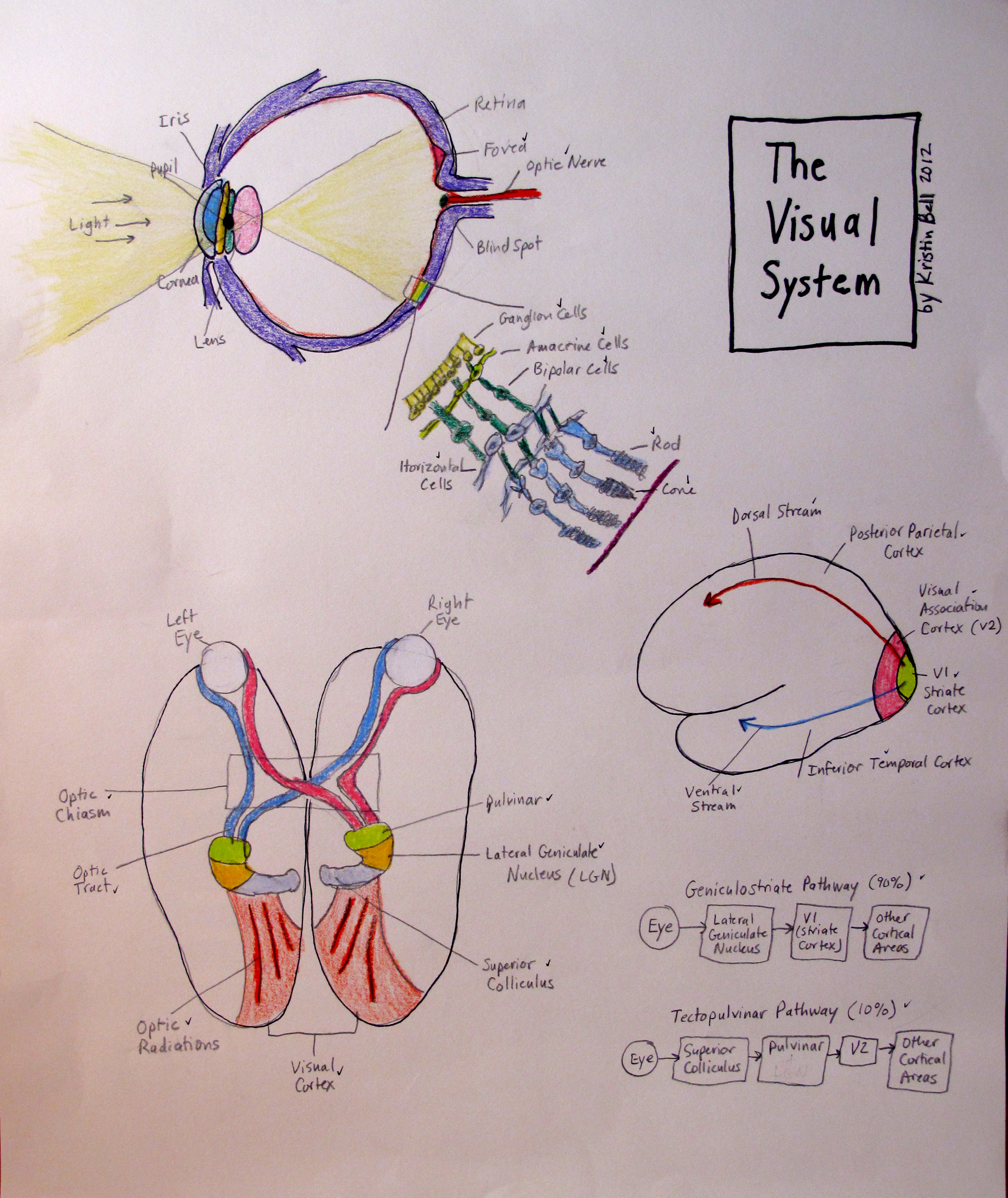
The Visual System: 7th Drawing for Neuro Class
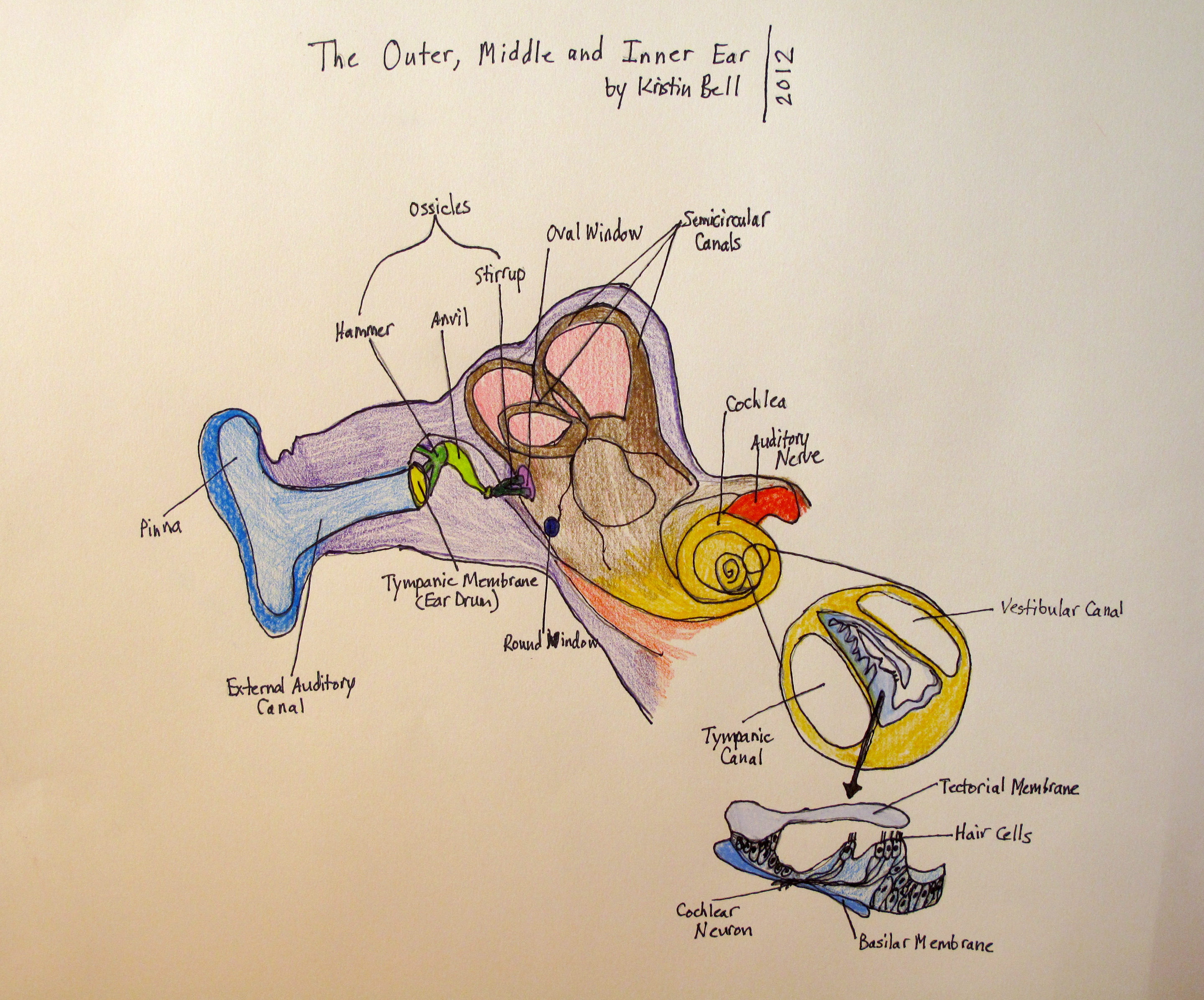
Art, drawings, eyes, fovea, Illustrated, Kristin Bell, Mental Health, neuroscience, optic, Psychiatry, Psychology, retina, rods and cones, Science, Seeing, sight, visual systemThe Auditory System: 6th Drawing for Neuroscience Class
Art, audio, audition, auditory system, basilar membrane, Biology, Brain, cochlea, drawings, ear drum, ears, hearing, Heschl's Gyrus, Kristin Bell, Medicine, Mental Health, Mental Illness, neuroscience, ossicles, Psychiatry, Psychology, Science, sound, tectorial membraneSchizophrenia and Possible Social-Emotional Brain Processing Deficits
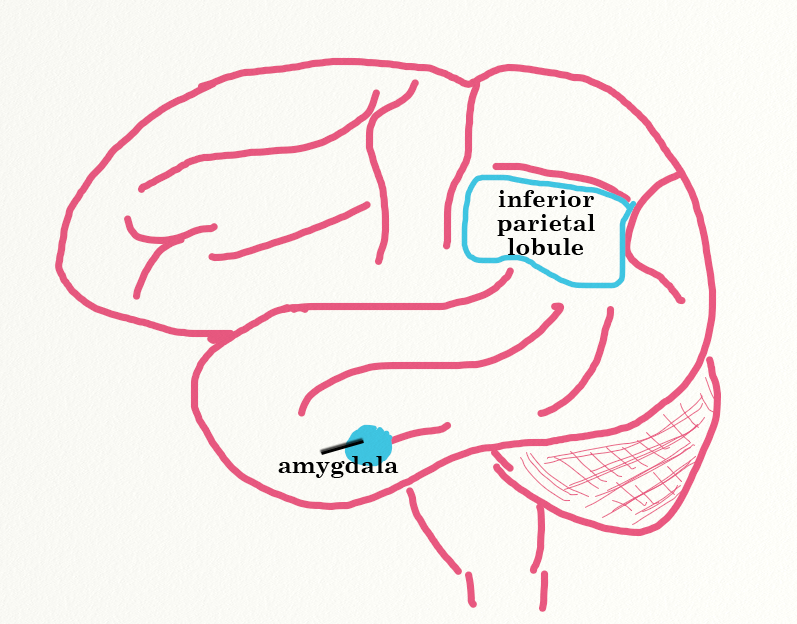
amygdala, fMRI, inferior parietal lobule, Kristin Bell, Mental Health, Mental Illness, Psych Meds, Psychiatrist, Psychiatry, Psychiatry Denial, Psychology, Psychosis, Research, Schizophrenia, Social-Emotion ProcessingAs reported in Schizophrenia Research, vol. 134 (2012) 118-124, Prerona Mukherjee et. al. presented their study that showed lower connection activity levels from the amygdala to the rest of the brain, specifically, to the inferior parietal lobule, for people with schizophrenia as compared to controls. The study involved 19 participants diagnosed according to the DSM-IV with schizophrenia and 24 controls matched for demographics like educational level, region, and age.
The study involved pre-assessment of symptoms and scanning the participants with an fMRI machine while they were shown fearful, neutral and baseline faces. Data was collected and analyzed showing that the participants with schizophrenia displayed reduced connectivity when shown fearful faces. The regions that were implicated involve social-emotional processing that is vital to social interactions.
The study supports the view that there may be a “functional disconnection” in brain regions that support and interpret social cues and emotion processing information for people with schizophrenia. This information also mirrors the symptoms that many patients with schizophrenia present with such as paranoia, flattened affect and lack of correct social cue processing.
Chinese Patients with Schizophrenia, Their Siblings, and Facial Emotion Processing
Academic, Chinese, facial emotion processing, Kristin Bell, left middle frontal gyrus, neuroscience, Prefrontal Cortex, Psychiatry, Psychology, Psychosis, SchizophreniaA study performed by Hui-jie Li et. al. based in Beijing, China and published in Schizophrenia Research vol. 134 (2012) tested 12 patients with schizophrenia for facial emotion processing. In the study, 12 of the non-ill siblings of the patients were also tested along with a control group of 12 people who were matched for demographic variables like IQ, age, gender, and education levels.
The researchers were especially interested in evaluating whether or not the patients with schizophrenia had deficits in facial emotional processing like other studies from Western populations have indicated. In essence, this was a replication study paired with a cultural component to test if facial emotional processing deficits are universal or not.
The data obtained from 8-minute fMRI scanning sessions where participants were shown 20 happy faces, 20 fearful faces and 20 neutral faces (at different times with different time intervals) were analyzed and it was found that the patients with schizophrenia showed abnormal activation of the “social brain neural circuit.” In addition, the sibling participants showed slight abnormalities that fell between what the patients with schizophrenia displayed and what the control group displayed. This result led researchers to hypothesize that there might be a deficit even in the non-ill siblings that the patients’ brains are trying to compensate for.
During the study the control group showed greater activation in various brain regions that processed the happy faces, but the patients with schizophrenia showed greater activation than the controls in the left middle frontal gyrus when processing the fearful faces. The sibling participants also showed greater activation than the controls (but less than their siblings with schizophrenia) when processing fearful faces, but had similar activation responses to controls with the happy faces.
The results of the study are similar to previous studies done to test for facial emotional processing in people with schizophrenia indicating that there are universal deficits in facial emotional processing that patients with schizophrenia must compensate for.
Lateral Human Brain: 4th Neuro Drawing
Art, Brain, Broca's Area, cerebellum, fissure, frontal lobe, gyrus, human, Kristin Bell, lateral view of brain, medulla oblongata, neuroscience, occipital lobe, parietal lobe, pons, Prefrontal Cortex, Psychiatry, Psychology, temporal lobe, Wernicke's AreaThis is the 4th pic for my neuro class. It is a drawing of the lateral human brain with only some of the parts. These are the parts we had to label. :) You can click the picture for a larger view. NOTE: The orbitofrontal cortex was mis-labeled in this picture. It should be on the anterior part of the frontal lobe! So, I deleted the old pic and now this new one has whiteout on it. Oh well! Live and learn! :)
The Synapses: 2nd Drawing for Neuro Class
Art, drawings, ionotropic, Kristin Bell, metabotropic, neuron, neuroscience, neurotransmitters, Psychiatry, Psychology, synapseMy Drawing of the Neuron
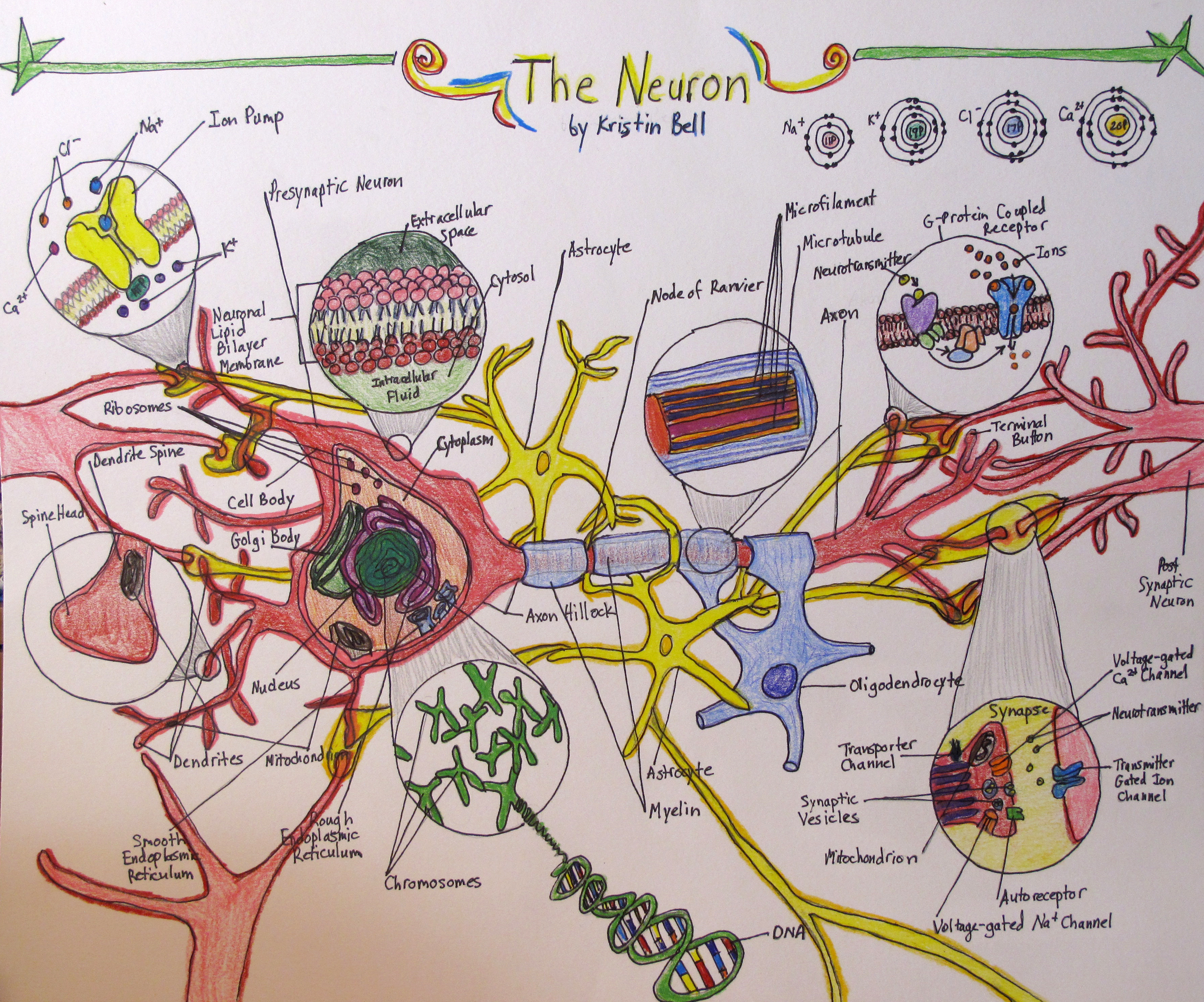
Art, astrocytes, axon, Brain, chromosomes, College, dendrites, dna, drawings, ion pump, Kristin Bell, myelin, neuron, neuroscience, neurotransmitters, node of ranvier, oligodendrocyte, Psychiatry, Psychology, synapse
I had to draw the neuron and its parts for my neuroscience class. Here is what I made! Click the pic for a larger view. :) NOTE: I had to change my picture a bit, because I didn’t have the astrocytes connecting to the synapses. I also added a few other things. It is a little more crowded now, but I guess more correct. Another NOTE: I deleted the first two pics because they had mistakes. Here is the final version which may also have mistakes, but I think it is the most correct version. :)
Success at School Makes Me Happy!
Abilify, Academic, Anti-psychotics, Bipap, Brain, Calculus, Calculus Example, College, Kristin Bell, Linear Algebra, Mathematics, Psych Meds, Psychiatry, Psychoactive Substances, Psychology, Schizophrenia, Sleep, Sleep Disorders, UniversityI’m very pleased to report that this last term at school went great! I took the first term of Calculus and Intro. to Linear Algebra and got A’s in both classes! I also had a really good time with the classes. I had great teachers too! I have seen a real improvement in my ability to actually get to classes because of my bipap sleep machine and have seen an even greater increase in my ability to do homework and concentrate since I started taking Abilify last January. Doing well in school has always been important to me, but because of my schizophrenia and sleep problems I have had a lot of issues with being able to attend and get through classes.
When I first became ill when I was 15 my grades really suffered. For the first time in my life I wasn’t a straight A student which was quite disheartening. The last two terms in school I have been feeling a lot like my old self for the first time since I was 15!!!
Anyway, this last term was great and a real ego booster! I just hope I can keep up the success! :)